Why Are Wireless Earbuds Better Than Wired Earphones for Daily Use?
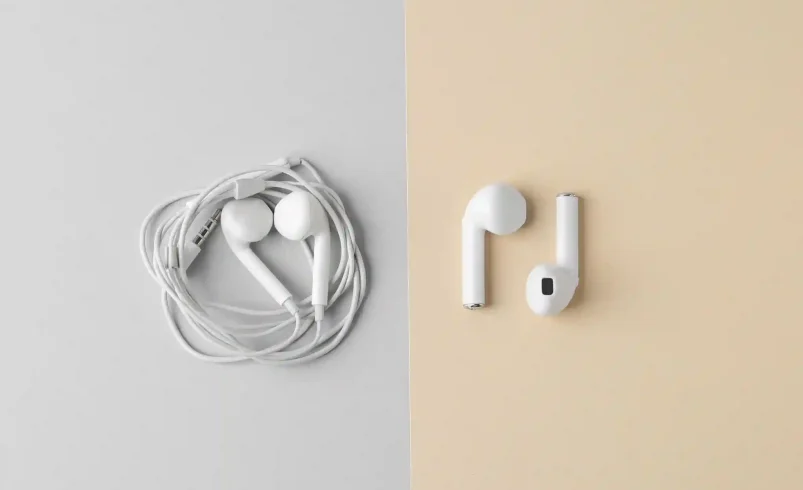
There is a specific kind of frustration that every wired earphone user knows intimately. You pull your phone from your pocket and the cable has somehow looped itself into a knot that takes forty-five seconds to untangle while your song plays through the speaker. You sit down at your desk and the wire catches on the armrest, yanking one earbud out mid-sentence during a call. You roll over in bed and the cable pulls taut across your neck. You pack your bag in a hurry and the earphones come out looking like a miniature ball of yarn. These are small annoyances individually. Accumulated across a day, a week, a year of daily use, they form a persistent low-level friction that quietly degrades the experience of listening to audio in a way that becomes invisible only because it is so constant.
The wireless vs wired earbuds conversation has been going on since Bluetooth audio became viable, and for years it was genuinely contested. Early wireless earbuds had real limitations. Battery life was short. Audio quality lagged noticeably behind wired equivalents. Connection reliability was inconsistent enough to interrupt music and calls at inconvenient moments. Latency was high enough to make video watching uncomfortable. These were legitimate objections that made wired earphones the defensible choice for anyone who prioritized audio quality or reliability above convenience.
The Freedom Argument Is Not About Comfort Alone
When people talk about the freedom that wireless earbuds provide, the conversation usually centers on physical comfort and the absence of cable inconvenience. That is real and worth discussing, but it understates what wireless freedom actually means for how people move through their day. The absence of a cable fundamentally changes the relationship between the listener and their audio in ways that go beyond not having to untangle anything.
Consider the practical reality of a typical day. A morning run where arms pump freely and the phone stays in a pocket or an armband without a cable running from ear to pocket to arm. A commute where the phone can be dropped into a bag without managing wire tension or worrying about yanking an earbud out when reaching for something. A workout where movement is unrestricted and the earphones stay in place regardless of how dynamic the exercise is. A desk session where leaning back in a chair or standing up to stretch does not require first removing earphones or managing cable length. An evening walk where the phone can be left at home entirely if the earbuds have sufficient onboard storage or are paired with a smartwatch.
What Cable Management Costs You Over Time
The hidden cost of wired earphones is not just the inconvenience of tangled cables. It is the physical wear that cable management imposes on the earphones themselves and the cognitive overhead it adds to the routine use of an everyday object. Wired earphones are among the most frequently replaced consumer electronics precisely because their most vulnerable component, the cable, is also the one most subjected to mechanical stress. Bending, pulling, wrapping, unwrapping, catching on objects, being compressed in bags and pockets, the cable of a wired earphone undergoes more physical stress in a month of normal daily use than most electronic components experience in years.
Audio Quality: The Gap Has Closed Significantly
The most persistent argument in favor of wired earphones is audio quality, and it deserves honest engagement rather than dismissal because it has historically been the most technically grounded objection to wireless audio. The argument is essentially this: analog audio signals transmitted through a wire are inherently higher fidelity than digital audio signals transmitted via Bluetooth because the wireless transmission introduces compression, processing, and potential interference that degrade the signal before it reaches the driver.
This argument was more persuasive five years ago than it is today. The development of high-quality Bluetooth audio codecs has substantially narrowed the gap between wired and wireless audio quality at consumer listening levels. aptX HD, LDAC, and AAC codecs all support transmission of high-resolution audio data at bitrates that approach or exceed the quality ceiling of most consumer audio sources. LDAC in particular, developed by Sony and now widely supported across Android devices, supports transmission at up to 990 kbps, which is sufficient to transmit 24-bit high-resolution audio without the aggressive lossy compression that characterized early Bluetooth audio.
Active Noise Cancellation Changes the Listening Experience Entirely
One area where wireless earbuds have developed capabilities that wired earphones structurally cannot match is active noise cancellation. ANC technology uses microphones on the earbuds to sample ambient noise and generates inverse sound waves that cancel the ambient sound before it reaches the ear. The result is a dramatic reduction in environmental noise that changes the listening experience in a way that physical passive isolation alone cannot achieve, particularly for low-frequency noise like aircraft cabin rumble, train noise, air conditioning hum, and traffic.
Battery Life in the Real World of Daily Use
Battery life remains the most frequently cited limitation of wireless earbuds, and it is worth addressing honestly rather than dismissively because it is a real constraint that does not exist for wired earphones. A wired earphone draws negligible power from the device it is connected to and functions indefinitely without any concern for battery management. A wireless earbud has a finite charge that must be managed as part of the daily use routine.
The practical picture is more favorable than the battery life limitation might suggest in theory. Current generation wireless earbuds from major brands typically deliver between six and ten hours of playback per charge from the earbuds themselves, with charging cases that provide two to four additional full charges before the case itself needs to be recharged. Total system battery life commonly ranges from 24 to 36 hours of listening across the buds and case combined. For the overwhelming majority of daily use patterns, a habit of placing the earbuds in their case when not in use, which is the natural behavior given that the case is also the storage and transport solution, keeps the earbuds charged without any deliberate charging management.
How Charging Cases Changed the Convenience Equation
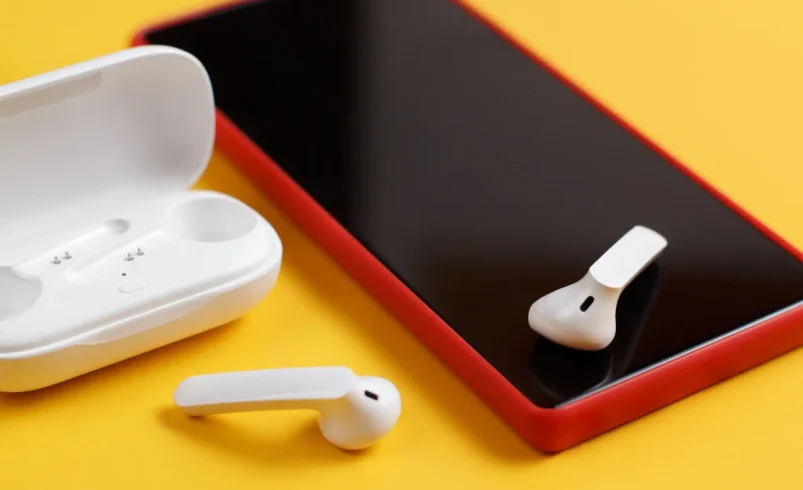
The charging case is an element of the wireless earbud system that is easy to overlook in a feature comparison but is actually one of the most practically important design elements in the daily use experience. It serves as storage, protection, transportation, and charging solution simultaneously, in a single compact object that fits easily in any pocket. This integration means that the natural behavior of a wireless earbud user, putting the earbuds away when not in use, is also the optimal charging behavior. There is no separate charging cable to manage, no charging dock to remember to connect at night, no routine that must be established independently of the natural use pattern.
Where Wired Earphones Still Hold Ground
Honest comparison requires acknowledging where wired earphones retain genuine advantages, because pretending those advantages do not exist would make this analysis less useful rather than more compelling. There are specific contexts and user profiles for which wired earphones remain the more appropriate choice, and understanding them helps identify who should make which decision.
For audiophiles and critical listeners who use high-resolution audio sources, high-end digital-to-analog converters, and amplifiers capable of driving high-impedance drivers, wired earphones or headphones remain the technically superior choice. The analog signal path from a high-quality DAC through a low-impedance cable to a high-quality driver is still capable of delivering audio fidelity that exceeds what any current Bluetooth codec can transmit. The gap has narrowed dramatically at consumer levels but it persists at the high end, and users who have invested in audio equipment designed to exploit that difference have legitimate reasons to prefer wired connections for dedicated listening sessions.
Final Thoughts
The wireless vs wired earbuds debate, viewed through the specific lens of daily use, arrives at a conclusion that the technology now fully supports. Wireless earbuds have matured into genuinely superior daily use devices for most people, not because wired earphones have become worse but because wireless technology has improved to the point where its remaining limitations no longer outweigh the substantial and growing advantages it offers. The freedom of movement, the intelligence of features like ANC and automatic ear detection, the seamless integration with multiple devices, the practical convenience of the case system, and the audio quality that now rivals wired alternatives in real listening conditions all combine into a daily use experience that wired earphones simply cannot match. The cable was once the price you paid for audio quality. It is now just the price you pay, and for most people who carry earphones every day, it is a price that has stopped being worth paying. Wireless earbuds have earned their place as the default choice for daily audio, and the gap between them and wired alternatives in the contexts that matter most to everyday users grows wider with every product generation that passes.