Can 1 Smart Home Energy Plan Stop Your High Bill Stress?
Smart homes are everywhere now, but lower energy bills are not. Many homeowners invest in smart plugs, smart lights, and smart thermostats, expecting automatic savings, only to find that their power consumption barely changes. The issue is not the technology. The issue is how it is configured, connected, and maintained over time. Smart Home Energy optimization is not about owning more devices. It is about making existing systems work together intelligently. When advanced settings, energy monitoring, and power consumption control are aligned with real household behavior, savings become consistent and measurable. This article explores how deeper configuration choices turn smart homes into energy-efficient systems rather than expensive convenience upgrades.
The Gap Between “Smart” Devices and Smart Energy Outcomes
Most smart homes operate as collections of independent gadgets rather than a coordinated energy system. Devices react to schedules or manual triggers but rarely adapt to real-world usage patterns. Default configurations prioritize comfort and convenience, not efficiency. As a result, heating runs when rooms are empty, lights stay active longer than needed, and background power draw slowly inflates monthly bills. Smart Home Energy savings only appear when automation rules are designed around energy outcomes instead of isolated tasks. Without intentional optimization, smart devices often automate waste instead of eliminating it.
Viewing Smart Home Energy as a Coordinated System
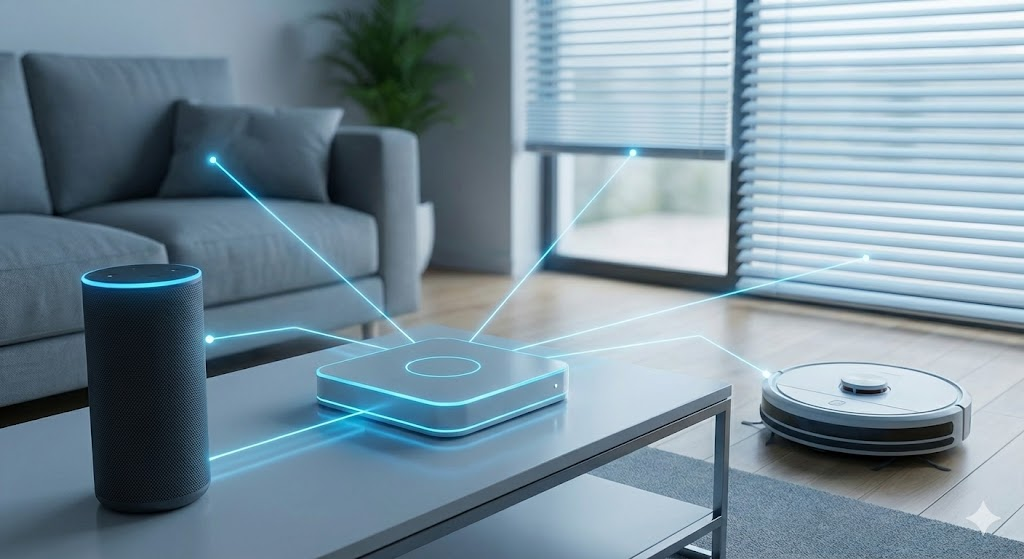
Energy optimization begins when the home is treated as a single system instead of separate devices. Each appliance affects others through shared power demand, usage timing, and environmental conditions. Coordination allows the system to respond intelligently rather than react blindly.
Individual Device Logic vs. Household Energy Behavior
A smart thermostat can reduce heating when no one is home, but it cannot account for appliance usage, lighting patterns, or occupancy across multiple rooms unless it shares context. Household energy behavior is shaped by routines, not isolated actions. When systems exchange data, automation becomes predictive rather than reactive. This shift reduces unnecessary cycles and stabilizes overall consumption.
Load Distribution Across Daily Routines
Energy use is uneven throughout the day. Morning routines, evening entertainment, and overnight standby loads all contribute differently. Optimizing Smart Home Energy requires distributing power usage intelligently across these periods. High-draw devices should not compete during peak hours unless necessary. When routines are mapped correctly, automation can flatten peaks and reduce strain on both the grid and the household budget.
Energy Monitoring as a Decision Engine, Not a Dashboard
Energy monitoring is often treated as a reporting tool, but its real value lies in decision-making. Data alone does nothing unless it triggers meaningful action.
Real-Time Signals and Behavioral Feedback
Instant feedback changes behavior. When homeowners see energy spikes as they occur, habits adjust naturally. Real-time monitoring supports automation rules that respond immediately, such as reducing HVAC output when consumption exceeds thresholds. This responsiveness turns monitoring into an active component of power consumption control.
Historical Patterns That Reveal Structural Waste
Long-term energy data exposes inefficiencies that are invisible day to day. Repeated spikes at certain hours or constant baseline consumption often signal misconfigured automation or inefficient devices. Reviewing trends allows homeowners to address root causes instead of symptoms. Over time, this analysis becomes the foundation of sustainable Smart Home Energy optimization.
From Data Visibility to Automated Corrections
Advanced systems translate data directly into action. Monitoring tools can trigger rule-based adjustments without manual input. For example, prolonged high usage may reduce nonessential device activity automatically. This closed-loop approach ensures optimization continues even when user attention fades.
Smart Thermostats as Energy Governors, Not Comfort Gadgets
Smart thermostats are often marketed as comfort tools, but their real strength lies in controlling the largest energy load in most homes. Used correctly, they regulate energy flow rather than simply adjusting temperature.
Occupancy-Responsive Temperature Logic
Static schedules assume predictable routines, which rarely exist. Occupancy-based adjustments respond to real movement patterns instead. When combined with room-level sensing, heating and cooling adapt precisely, reducing waste without sacrificing comfort.
Zonal Control and Thermal Prioritization
Not all rooms need equal conditioning. Zonal control allows priority areas to receive energy while others remain in low-power states. This targeted approach significantly lowers overall consumption and improves system efficiency.
Power Consumption Control Through Hierarchies and Rules
Effective automation relies on structure. Random rules create conflict and inefficiency, while hierarchies establish clarity and control.
Ranking Devices by Energy Impact
Not all devices deserve equal attention. High-draw systems such as HVAC units and water heaters should dominate optimization efforts. Establishing energy priorities ensures that reductions target the most impactful areas first.
Conditional Control of High-Draw Systems
Automation rules work best when conditional rather than absolute. Heating may reduce output only when usage exceeds limits or when occupancy drops. This flexibility maintains comfort while preventing unnecessary consumption.
Stability, Overrides, and User Trust
Automation fails when users feel powerless. Clear override options build trust and encourage long-term use. Stable systems that behave predictably are more likely to remain active, preserving Smart Home Energy gains over time.
Invisible Energy Losses Inside Advanced Smart Homes
Even well-equipped homes suffer from hidden inefficiencies. These issues often persist unnoticed for months.
Automation Without Measurement
Rules that are never evaluated eventually become outdated. Without measurement, automation continues running even when conditions change. Regular review ensures energy-saving logic remains relevant.
Schedule Collisions and Logic Overlap
Conflicting automations can cancel each other out. One rule may activate heating while another reduces it, increasing cycling and waste. Simplifying logic prevents these silent inefficiencies.
Seasonal Drift in Energy Configuration
Energy needs shift with seasons, but automation often stays static. Settings optimized for winter may waste energy in summer. Periodic updates keep Smart Home Energy systems aligned with environmental changes.
Verifying Savings Beyond Monthly Bills
Energy bills alone can be misleading due to weather fluctuations and rate changes. True verification comes from normalized comparisons and device-level analysis. Tracking usage trends, peak reduction, and baseline consumption offers a clearer picture of Smart Home Energy performance. This approach separates genuine optimization from external factors.
Where Smart Home Energy Optimization Is Headed Next
The future lies in predictive systems that anticipate demand rather than respond to it. AI-driven automation will balance loads dynamically, communicate with the grid, and adjust consumption based on real-time conditions. Homes will shift from passive consumers to active participants in energy ecosystems, optimizing both cost and sustainability.
Final Thought
Smart Home Energy optimization is not a one-time setup. It is an ongoing process that blends technology, behavior, and data-driven decision-making. Homes that achieve meaningful savings treat energy as a managed resource rather than a background expense. By aligning automation with real-world usage, leveraging energy monitoring as an active control system, and refining configurations over time, homeowners can transform smart devices into lasting financial and environmental assets. The smartest homes are not the ones with the most gadgets, but the ones that understand how energy truly flows within their walls.
FAQs
Can advanced smart home settings really reduce energy bills?Yes, but only when automation is designed around energy outcomes rather than convenience alone. Proper configuration consistently lowers consumption.
Is energy monitoring required for effective optimization?Absolutely. Without monitoring, there is no feedback loop, and optimization becomes guesswork.
Do smart thermostats work independently?They perform best when integrated with occupancy sensors, weather data, and other automation systems.
How often should automation rules be reviewed?At least twice a year, ideally during seasonal transitions.
Can automation increase power usage?Poorly designed rules can increase consumption. Measurement and periodic review prevent this issue.