Is 1 Generative AI Workflow the Secret to Your Team’s Happiness?
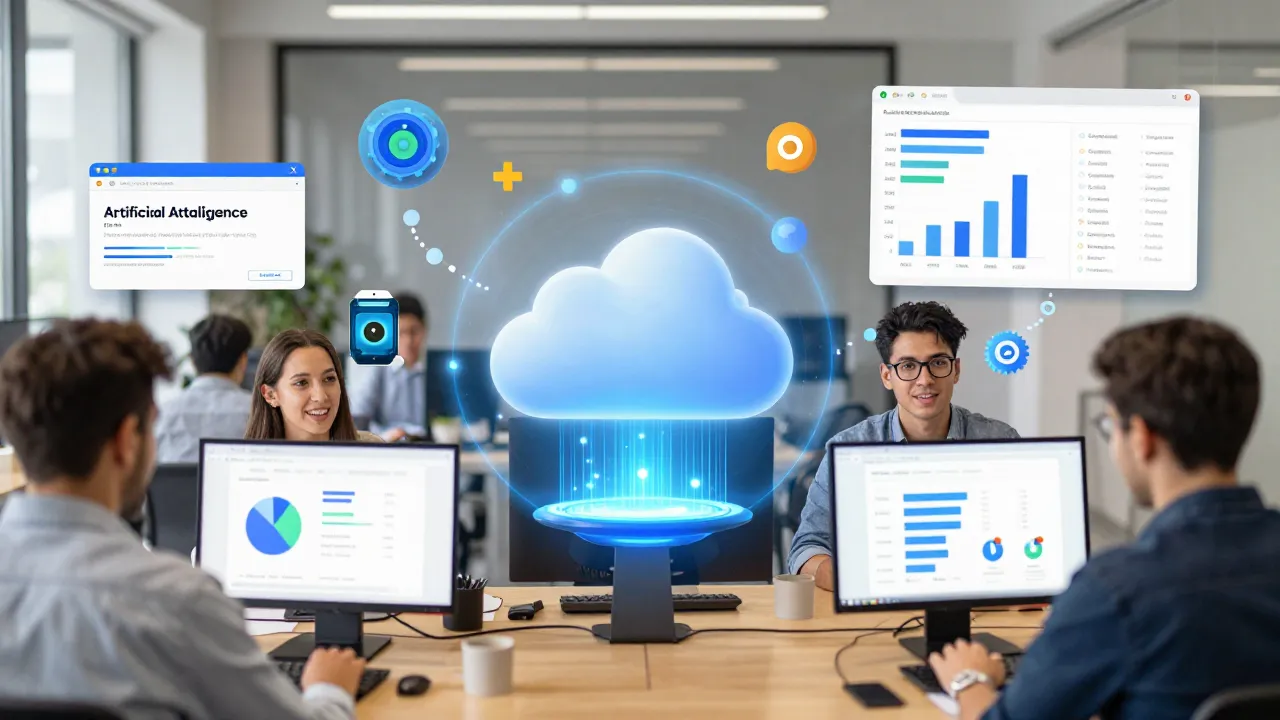
Generative AI is no longer treated as a novelty tool reserved for drafting blog posts or marketing copy. In high-performing organizations, it is becoming part of the operational backbone. Teams are embedding generative AI directly into workflows where decisions are made, tasks are executed, and outcomes are measured. This shift marks an important transition. Instead of asking what generative AI can produce, organizations are asking where it fits within daily execution. A Generative AI Workflow now connects systems, people, and automation in ways that quietly improve speed, quality, and consistency across functions.
Why Content Creation Was Only the First Wave
Content writing became the first widespread use case because it was visible, low-risk, and easy to test. It delivered quick wins without disrupting core systems. However, that same simplicity has become a limitation for teams seeking deeper value. Content workflows often sit at the edge of operations rather than at the center. Once teams mature in their AI adoption, they quickly realize that the greatest efficiency gains come from operational tasks that involve repetition, interpretation, and coordination. Generative AI delivers its strongest impact when it reduces friction across processes, not just when it produces text.
Reframing Generative AI Workflow as a System
To unlock meaningful value, organizations must stop treating generative AI as a standalone assistant and start viewing it as part of a system.
From Single Prompts to Continuous Workflows
Single prompts create isolated outputs. Continuous workflows create compounding value. In a mature Generative AI Workflow, AI outputs automatically feed into the next step of a process. A generated summary updates a CRM record. A drafted response triggers a ticket resolution flow. A synthesized report informs a planning meeting. This chaining of actions turns AI from a tool into an operational layer that reduces manual effort across entire processes.
Human Oversight as a Design Requirement
Despite rapid advances, generative AI cannot operate without human oversight in enterprise environments. The most effective workflows intentionally design checkpoints where humans validate, adjust, or approve AI-generated outputs. This balance preserves accuracy and trust while still capturing efficiency gains. Human oversight is not a weakness of AI automation. It is a critical design feature that enables safe and scalable adoption.
Where AI Automation Creates Immediate Operational Impact
The strongest non-content use cases appear where work is repetitive, information-heavy, and time-sensitive.
Process Documentation and Knowledge Extraction
Organizations accumulate vast amounts of unstructured information. Meeting notes, internal documents, emails, and chat logs often contain valuable insights that remain inaccessible. Generative AI can extract, organize, and summarize this information into usable knowledge assets. Instead of manually maintaining documentation, teams can rely on AI to continuously update process guides, decision logs, and internal knowledge bases. This improves onboarding speed and reduces dependency on individual contributors.
Customer Support Triage and Resolution Acceleration
Customer support operations benefit significantly from Generative AI Workflow integration. AI can classify incoming tickets, detect intent, and suggest resolution paths before human agents engage. This reduces response times and improves consistency. AI-generated draft responses help agents focus on judgment rather than phrasing. Over time, support teams spend less effort on routine cases and more effort on complex customer needs.
Sales Enablement and Deal Intelligence
Sales teams operate under constant information pressure. Generative AI can assist by synthesizing account research, summarizing past interactions, and highlighting deal risks. Instead of searching across tools, sales professionals receive contextual insights at the moment of action. This improves preparation quality and shortens sales cycles. AI does not replace sales judgment. It enhances situational awareness.
Generative AI in Decision Support and Analysis
Beyond automation, generative AI plays a growing role in analytical support.
Scenario Modeling and What-If Analysis
Generative AI can rapidly explore alternative scenarios by analyzing structured and unstructured inputs. Leaders can test assumptions, evaluate trade-offs, and simulate potential outcomes without relying on static models alone. These AI-assisted scenarios do not predict the future. They expand the range of options considered, improving strategic thinking and decision confidence.
Data Interpretation Across Disconnected Systems
Most organizations operate across fragmented data environments. Generative AI helps bridge these gaps by synthesizing insights across tools. It can interpret patterns, highlight inconsistencies, and surface relationships that would otherwise require manual analysis. This capability is especially valuable in strategic planning, where insights must span finance, operations, customer data, and market signals.
Process Optimization Through Embedded AI
The real power of AI automation emerges when it is embedded into existing workflows.
Reducing Manual Handoffs and Rework
Manual handoffs between teams create delays and errors. Generative AI can automate transitions by preparing information in the right format for the next stage of work. This reduces rework and improves throughput. When AI handles translation between systems and teams, processes flow more smoothly and predictably.
Exception Handling and Edge-Case Detection
Traditional automation struggles with exceptions. Generative AI excels at identifying anomalies and edge cases. By flagging unusual patterns or ambiguous situations, AI directs human attention where it is most needed. This improves operational resilience and reduces the risk of unnoticed failures.
Enterprise AI Tools: Integration Over Innovation
In enterprise environments, integration matters more than novelty.
APIs, Orchestration, and Workflow Triggers
Enterprise AI tools deliver value when they integrate seamlessly with existing platforms. APIs allow generative AI to act within established systems. Orchestration layers coordinate triggers, approvals, and downstream actions. This integration ensures AI supports real workflows rather than creating parallel processes that increase complexity.
Security, Permissions, and Governance Considerations
Enterprise adoption introduces governance requirements. Access controls, audit trails, and data handling policies must be built into the Generative AI Workflow. These considerations slow adoption when ignored and accelerate it when addressed early. Governance enables scale by establishing trust and accountability.
Adoption Challenges Inside Real Organizations
Even well-designed workflows face adoption barriers.
Trust, Reliability, and Output Variability
Inconsistent outputs undermine trust. Users hesitate to rely on AI when results vary unpredictably. Addressing this challenge requires clear guidelines on acceptable use cases, continuous monitoring, and iterative improvement. Over time, trust grows as users understand strengths and limitations.
Change Management and Skill Gaps
AI adoption changes how work is done. Employees must learn new ways of collaborating with AI systems. Without training and clear communication, resistance emerges. Successful organizations invest in skill development and position AI as an augmentation tool rather than a threat.
What a Mature Generative AI Workflow Looks Like
In mature organizations, generative AI operates quietly in the background. Workflows are stable, predictable, and continuously improving. AI supports execution without constant supervision. Humans focus on judgment, creativity, and strategy. AI handles coordination, synthesis, and routine interpretation. This balance represents sustainable maturity rather than experimental hype.
Closing Perspective
Generative AI delivers its greatest impact when embedded into workflows that matter. Content writing was only the beginning. AI automation, enterprise AI tools, and process optimization now define the next phase of adoption. Organizations that treat generative AI as an execution partner rather than a novelty tool will move faster, decide better, and scale more confidently. The future of work is not AI replacing humans. It is AI working alongside them, quietly improving how organizations operate every day.