
Will 5 Breaking Gadget Innovations Make Your Life Effortless?
In an era where technology is changing fast like lightning, consumers are always swamped with options. Smartphones, laptops, smart home devices, and so on can be rather overwhelming. This is the point where tech reviews enter the picture. They act as a guiding force and assist consumers through the maze of products in technology. In this all-inclusive guide, we shall be discussing the significance of tech reviews, the evaluation procedure, and the most appropriate measures to discover the trustworthy information. By the conclusion of this article, you will have the information you need to make better choices about your next tech purchase.
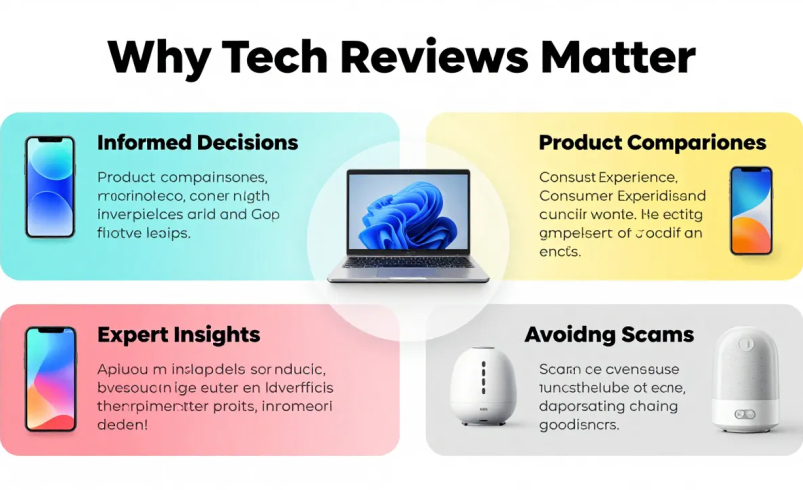
Why Tech Reviews Matter
Tech reviews are essential for several reasons:
Informed Decisions: There are so many products in the market and through the reviews, customers are able to know the advantages and disadvantages of every device and make wise decisions.
Product Comparisons: Comparisons are usually made of similar products with the differences of their performance, features and prices which proves to be very helpful when buying the correct device.
Consumer Experience: Reviews are based on real world usage, they provide the insights of real users. This is able to highlight problems that were not highlighted in the marketing materials.
Expert Opinions: There are numerous technology reviews by the professionals. Their reviews can make you grasp the technicalities and the way they influence the practical use.
Avoiding Scams: Consumers are able to detect low quality or fraudulent goods through reading reviews, which prevents them from being victims of scams.
Types of Tech Reviews
Tech reviews come in various formats, each serving a different purpose. Here are the most common types:
1. In-Depth Reviews
These are comprehensive evaluations of a product, covering all its features, specifications, and performance metrics. In-depth reviews often include benchmarks, comparisons with competitors, and detailed user experiences.
2. Short Reviews
Short reviews provide a quick overview of a product, summarizing its key features and performance in a few paragraphs. They are useful for consumers who want to make quick decisions without diving into extensive detail.
3. Video Reviews
Video reviews have gained popularity, especially on platforms like YouTube. They offer visual demonstrations of the product, making it easier for consumers to see the device in action and understand its features.
4. User Reviews
These are reviews written by everyday consumers who have purchased and used a product. User reviews can provide insights into long-term performance, reliability, and satisfaction levels.
5. Comparison Reviews
Comparison reviews pit two or more products against each other, analyzing their features, performance, and pricing. This format helps consumers decide which product suits their needs best.
How to Evaluate Tech Reviews
Not all tech reviews are created equal. Here are some tips for evaluating their credibility and usefulness:
1. Check the Source
Always consider the source of the review. Established tech websites, blogs, and magazines are generally more reliable than anonymous or lesser-known sources. Look for sites like CNET, TechRadar, and The Verge, which have a reputation for thorough and unbiased reviews.
2. Look for Expertise
Reviewers with a background in technology or specific product categories are likely to provide more insightful analyses. Check the author’s credentials to assess their expertise.
3. Assess the Depth of the Review
A good review should cover the product comprehensively, discussing its features, benefits, drawbacks, and performance. Avoid reviews that are overly brief or lack detail, as they may not provide a complete picture.
4. Check for Updates
Technology products often receive software updates that can change their performance. Reliable reviews will mention whether the review reflects the latest version of the product.
5. Compare Multiple Reviews
Reading multiple reviews can provide a balanced perspective. If several reputable sources agree on a product’s strengths and weaknesses, you can have more confidence in your decision.
6. Look for User Feedback
User reviews can complement expert opinions. They often highlight real-world issues that experts may overlook. Consider both expert reviews and consumer feedback before making a decision.
Best Practices for Finding Tech Reviews
Finding reliable tech reviews requires a strategic approach. Here are some best practices to follow:
1. Use Search Engines Effectively
When looking for tech reviews, use specific keywords related to the product you are interested in. For example, searching “best smartphone 2025 review” will yield more relevant results than a generic search.
2. Visit Aggregator Sites
Websites like TechBargains and Consumer Reports aggregate reviews from various sources, providing comprehensive comparisons and rankings. These sites can save you time and help you find the best products.
3. Leverage Social Media and Forums
Platforms like Reddit, Twitter, and Facebook can be excellent resources for finding real user opinions. Look for tech-focused groups or forums where members share their experiences and recommendations.
4. Subscribe to Tech Newsletters
Many tech websites offer newsletters that provide updates on the latest reviews, trends, and releases. Subscribing to these can keep you informed about new products and expert opinions.
5. Follow Influential Tech Reviewers
Identify and follow tech reviewers who align with your preferences. Many reviewers have dedicated YouTube channels or blogs where they regularly post detailed reviews and comparisons.
Popular Tech Review Websites
Here’s a list of some of the most trusted tech review websites where you can find reliable information:
CNET: Known for its comprehensive reviews and tech news coverage, CNET offers expert opinions on a wide range of products.
TechRadar: This site provides in-depth reviews, comparisons, and buying guides for various tech products, making it a valuable resource for consumers.
The Verge: With a focus on the intersection of technology, science, art, and culture, The Verge offers insightful articles and reviews on the latest gadgets and trends.
Tom’s Hardware: Ideal for PC enthusiasts, Tom’s Hardware provides detailed reviews, benchmarks, and buying guides for computer hardware and peripherals.
Engadget: This site covers the latest in gadgets and consumer electronics, offering reviews, news, and opinion pieces.
Consumer Reports: A non-profit organization that tests and rates products, Consumer Reports provides unbiased reviews and recommendations based on rigorous testing.
Conclusion
In the era of technology, it is easy to become overwhelmed by technology, but when one learns how to handle technology reviews, then a consumer is able to make an informed choice that will not be unfavorable to him or her. Knowing the usefulness of reviews, analyzing their quality and observing the best procedures of locating information that can be trusted, you can be on the top of the fast-changing world of technologies. Whether you are buying a new smartphone, laptop or smart home device, in-depth tech reviews will make you decide what the best product is in your lifestyle. Be updated, be technologically inclined and reap the advantages of the newest gadgets
FAQs
1. How do I know if a tech review is trustworthy?
As a way of evaluating the credibility of a tech review, verify the credibility of the source, expertise of the reviewer, and whether the review presents a complete picture or not. Comparison of various reviews posted on credible websites will also enable one to ascertain the quality of the product.
2. What should I look for in a tech review?
In a tech review, one should seek in-depth babbling of the product features, performance, advantages and disadvantages of the product, user experiences and comparison with related products. The balanced review will provide a clear picture of the value of the product.