Can 10 Expert Tech Reviews Save You from Buying Stress?
With the advent of technological revolution, artificial intelligence (AI) is still shaping the future of automation in different sectors. The benefits of AI are enormous and continuous since they are not only in improving productivity but also in revolutionizing customer experiences. This blog will reveal the current tendencies in AI, as well as the opportunities they have brought to automation and how they will affect your life and work soon.
Understanding AI and Automation
Artificial intelligence is the replication of human processes of intelligence by machines and especially computer systems. These activities are learning (the acquisition of information and adherence to rules on how to use information), reasoning (the application of rules to make approximate or certain conclusions) and self correction. AI is divided into two broad categories:
Narrow AI: It is tailored to do a particular task i.e. facial recognition or language translation. The majority of AI applications of today belong to this category.
General AI: A conceptual type of AI that has the capacity to learn and comprehend information and use it in an activity that cannot be differentiated by a human.
The Role of Automation
Automation is a technology that is used to do some tasks without human intervention. The use of AI has brought about a new level of automation, though it has been decades since it has been a component of industrial processes. The automation based on AI improves the existing processes, which can be more efficient and accurate and can be scaled.
The AI revolution in automation is noticeable across different fields, including manufacturing and healthcare, where it simplifies processes, eliminates human error, and enables more rapid decision-making. Automation, in this case, is not only a question of eliminating human labor, but it is a question of expanding possibilities and changing the essence of work itself.
Key AI Trends Shaping Automation
1. Intelligent Process Automation (IPA)
Intelligent Process Automation is a form of robotic process automation (RPA) when AI technologies, including machine learning and natural language processing, are integrated into it. Through this integration, organizations are able to automate complicated tasks that need decision-making and cognitive skills.
Example: In finance, AI can be used to analyze vast data to identify anomalies in transactions to automate fraud detection efforts that were once done manually. This does not only accelerate operations but also increases precision thereby minimizing the chances of making an error that is also expensive.
2. AI-Powered Decision Making
AI is increasingly being used to support decision-making processes in various industries. By analyzing vast amounts of data, AI systems can provide insights that empower organizations to make informed choices.
Predictive Analytics: Businesses can anticipate customer behavior, market trends, and operational challenges, allowing them to adapt strategies proactively. For instance, retailers can use AI to predict inventory needs based on seasonal trends and consumer purchasing patterns, optimizing stock levels and reducing waste.
3. Enhanced Customer Experiences
AI is changing the interaction of customers by automating it. Artificial intelligence-based chatbots and virtual assistants will be able to respond to customer requests, as well as give them personalized recommendations and enhance the overall quality of the service.
24/7 Support: Chatbots powered by AI will guarantee customers the provision of real-time support which will improve satisfaction and customer interaction. These tools are capable of dealing with a number of queries at the same time releasing human agents to deal with more complex tasks. This means that the businesses will be able to deliver a greater degree of service without necessarily raising the costs.
4. AI in Supply Chain Management
The integration of AI into supply chain management is revolutionizing how businesses operate. AI algorithms can optimize inventory management, forecast demand, and streamline logistics.
Real-Time Tracking: Companies can monitor shipments in real-time, predict delays, and adjust plans accordingly, leading to greater efficiency and cost savings. This capability is particularly crucial in today’s fast-paced market, where consumer expectations for quick delivery are higher than ever.
5. Workforce Augmentation
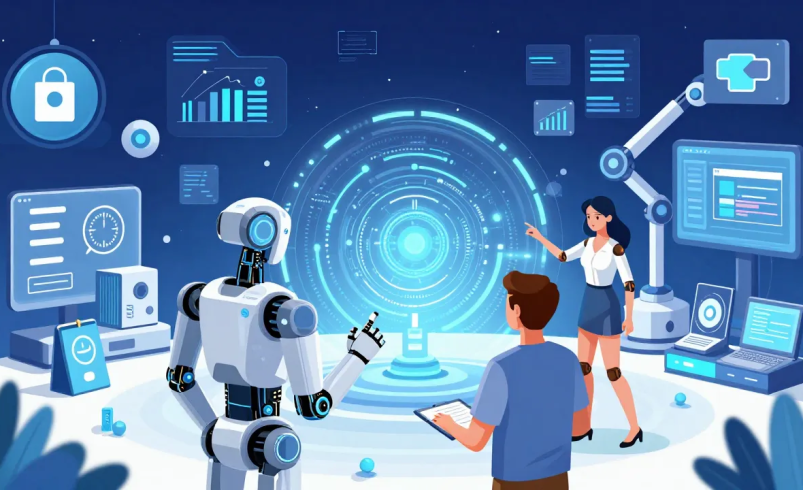
AI is not only about taking over human jobs, but it is about augmenting the human workforce. Cobots (collaborative robots) are meant to operate in cooperation with people with the purpose of increasing productivity and safety.
Manufacturing: Cobots are used in factories to help employees in their repetitive duties to enable them concentrate on the more intricate and creative job elements. This teamwork model enhances productivity in addition to increasing job satisfaction since workers will be able to work in areas that are more meaningful.
The Implications of AI Trends on Your Future
1. Job Transformation
While concerns about job displacement due to automation are valid, the reality is that AI will create new job opportunities. The workforce will need to adapt to new roles that involve managing and working alongside AI technologies.
Upskilling: Continuous learning and upskilling will be essential for employees to remain competitive in an AI-driven job market. Companies may need to invest in training programs to help their workforce acquire the necessary skills to thrive in this new environment.
2. Increased Efficiency and Productivity
AI-driven automation will lead to significant efficiency gains across industries. Businesses will be able to operate at scale, reduce costs, and enhance productivity, ultimately benefiting consumers through better products and services.
Streamlined Operations: With AI handling routine tasks, organizations can focus on strategic initiatives, innovation, and customer engagement, leading to overall growth and enhanced market position.
3. Ethical Considerations
As AI becomes more integrated into daily life, ethical considerations regarding data privacy, bias, and accountability become paramount. Organizations must prioritize ethical AI practices to build trust with consumers and ensure fair outcomes.
Transparency: Companies should be transparent about how AI systems operate and the data they use, fostering public confidence in these technologies. Additionally, addressing potential biases in AI algorithms is critical to ensuring equitable outcomes for all users.
4. Enhanced Personalization
AI will enable businesses to offer highly personalized experiences to consumers. From tailored marketing campaigns to customized product recommendations, AI can analyze individual preferences and behaviors to deliver relevant content.
Consumer Insight: Businesses that harness AI for personalization will likely see higher engagement rates and customer loyalty. For example, streaming services utilize AI algorithms to recommend content based on viewing history, significantly improving user satisfaction.
Preparing for the Future of AI and Automation
1. Embrace Lifelong Learning
As AI continues to evolve, individuals must commit to lifelong learning. Staying informed about technological advancements and acquiring new skills will be crucial for navigating the changing job landscape. Online courses, workshops, and industry certifications can provide valuable knowledge and skills.
2. Foster a Culture of Innovation
Organizations should cultivate a culture that encourages innovation and experimentation. Embracing AI and automation can drive efficiency and open new avenues for growth. Encouraging employees to propose new ideas and solutions can lead to breakthrough innovations.
3. Prioritize Ethical AI Practices
Businesses must prioritize ethical AI practices, ensuring that algorithms are fair, transparent, and accountable. Establishing ethical guidelines will be essential to mitigate risks and build trust. Organizations should also engage with stakeholders to understand their concerns and expectations regarding AI use.
4. Invest in AI Technologies
Organizations should invest in AI technologies that align with their goals and enhance productivity. Implementing AI-driven solutions can lead to significant operational improvements and competitive advantages. Additionally, collaborating with AI startups and tech companies can provide access to cutting-edge innovations.
Conclusion
The future of automation undoubtedly goes hand in hand with the development of AI technology. With the growing use of AI-based solutions by organizations, businesses and individuals will be greatly affected.
The nature of the landscape might be intimidating, but adopting AI trends and automation will result in increased efficiency, better customer experiences, and creation of new work opportunities. By making preparations towards such changes, individuals and organizations will be in a position to be successful in an AI-powered world.
To continue on a positive path, we must keep flexible and ethical practices to ensure that the good of AI is experienced by everyone. It is the era of automation, and we should live in the future.